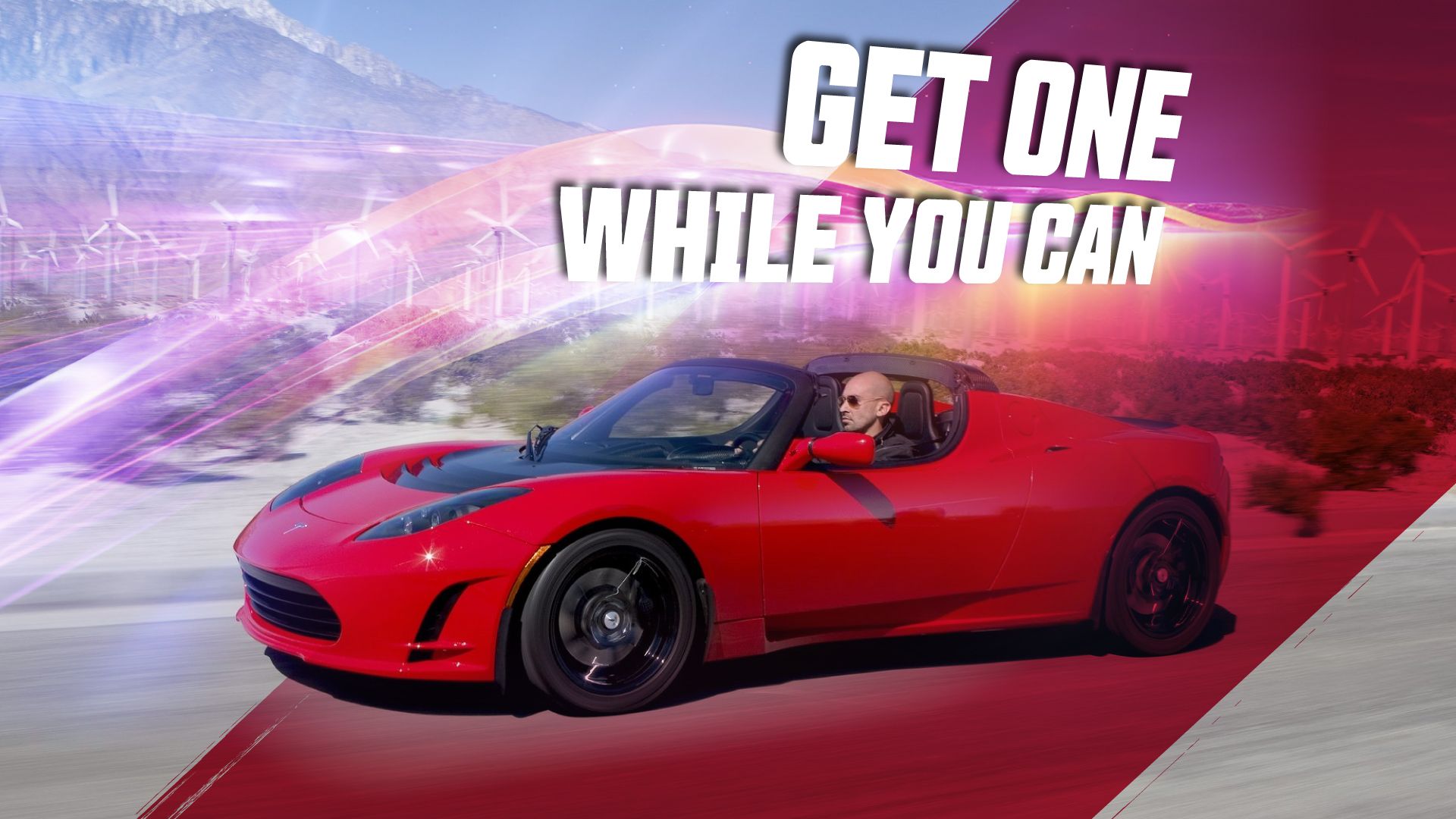
Why The Tesla Roadster Is A Guaranteed Future Classic
Quick Links
When looking at Tesla’s history and lineup, the first vehicle made by what was then a small startup is frequently forgotten or ignored: the first-generation Roadster, a car with a very small production run which was only on the market for five years.
The fact that so few were produced, and that the company eventually grew to build best-selling mass-production cars like the Model S and Model 3, means the Roadster is often left out of the conversation; however, this car has a very important place in the company’s evolution, as the one that started it all. Those lucky enough to own one may very well have their hands on a future classic: the car’s character, rarity, and historical relevance all point to it being a highly prized collectible. Let’s take a look back at its history and features.

- Base Trim Engine
-
Electric
- Base Trim Transmission
-
Single Speed Automatic
- Base Trim Drivetrain
-
Rear-Wheel Drive
This article looks into the history of the Tesla Roadster with a focus on the first generation, and why it’s likely to become a future classic.
The First Generation Tesla Roadster: An Overview
|
Tesla Roadster (First Generation) Specs |
|
|
Powertrain |
Single electric motor |
|
Power |
248–292 hp |
|
Torque |
200–295 lb-ft |
|
0-60 mph |
3.7-3.9 seconds |
|
Top Speed |
125 mph |
The Tesla Roadster was the very first vehicle built by Tesla, going into production in 2008 and remaining on the market until 2012. It also claims another important title in the history of electric vehicles: it was the first all-electric, highway-legal production car to be equipped with lithium-ion battery cells.
It was powered by a single electric motor, which produced 248 hp. A year after the Roadster went into production, Tesla unveiled a Sport model at the 2009 Detroit Auto Show, which had a higher power output at 288 hp. All Roadsters are equipped with a single-speed gearbox. The Roadster was also at the forefront of innovation on the driving range front, being the first EV to have a range of over 244 miles on one charge.

Related
6 Pro Tips: How To Extend Your EV’s Battery Life
From storage to charging, here’s how to maximize range, battery life, and more.
In 2010 the Roadster received an upgrade, with features such as a more premium interior, improved heating and air conditioning systems, and a new display to help the driver monitor performance data in real time. Two years later a special edition of the model, consisting of just 15 units, was produced to commemorate the end of the Roadster’s production run. While the “Final Edition” cars were mechanically unchanged, they were equipped with unique cosmetic features such as stripes on the hood, exclusive wheels, and a unique Atomic Red paint color.
History And Development
Tesla had been working on the development of a sports car since just after the turn of the millennium. Between 2004 and 2007 several prototypes were built, with the help of Lotus’ engineering expertise thanks to a deal struck between the two companies in 2005. The Roadster was the result of that collaboration, and shares several similarities with the Lotus Elise, although Tesla has minimized the connection between the two models over the years. In a blog post on Tesla’s website, then-vice president of marketing and sales Darryl Siry stated that the Roadster only borrowed 7% of its parts from the Elise.
The Roadster eventually hit the market in 2008, with the first 1,000 cars being built by the start of 2010 and production wrapping up two years later. In 2018, the Roadster found itself yet again at the center of the automotive world’s attention, thanks to a typically Tesla-esque publicity stunt. The Roadster from Elon Musk’s own car collection was launched into space, with some help from the SpaceX Falcon Heavy rocket. A dummy dressed as an astronaut, nicknamed “Starman”, sat behind the wheel, while the stereo was set to play David Bowie’s “Space Oddity” on a loop. The launch was successful, with the car going into orbit around the sun; its current location can be tracked through a dedicated website.
The Makings Of A Classic
The first-generation Roadster has everything it takes to become the first true electric classic car. A large part of its character comes from another car well into the process of becoming a classic: the Lotus Elise. Many of the Elise’s core personality traits (lightweight, fun, engaging) were carried over in the Roadster.
The first-gen Roadster’s performance has also held up by modern standards. Its sub-four-second 0-60 time is still respectable for a sports car today, and although its 125 mph top speed may not seem particularly worthy of an eyebrow raise in the modern automotive world, it still provides heaps of driving enjoyment in a car that’s small and agile.

Related
Future Classic Cars: Potential Future Icons Of The Automotive World
Which cars from the modern era have a recipe that will stand the test of time?
Of course, with battery technology having evolved so much in the 17 years since the model’s release, the Roadster no longer makes as much of an impression as it used to. The Lucid Air, for example, now has twice as much driving range as the Roadster did when launched. Surviving Roadsters have also suffered from severe battery deterioration over the years. In 2016, the company offered a battery upgrade to Roadster owners to mitigate the problem, however this failed to solve the issue. As a result, Roadster drivers have resorted to a variety of creative battery management solutions in an effort to keep their cars on the road.
Getting your hands on a used Roadster is not easy, as it is quite a rare model. The production run was fairly small with around 2,450 units built in total and several cars are no longer on the road. Only around 1,500 Roadsters are estimated to have survived to the present day. As a result, the few examples for sale on the used market are rare gems. Prices start at around $80,000, for cars with a higher mileage or in a poorer condition; the upper end of the range, meanwhile, brushes against the $200,000 mark.
In 2023, MotorTrend reported that a number of Roadsters had suffered an unfortunate fate: as Tesla was no longer servicing the model or producing replacement parts, many cars had to be used for spare parts to keep others on the road. This ultimately created a Maryland-based boneyard of picked-apart Roadsters with no useful parts left, waiting to become scrap metal. Since the total production numbers of the model were so low to begin with, this has put a further dent in the number of Roadsters circulating today.
A Meme On Wheels: The Second Generation
Back in 2012, just as the first Roadster was leaving the market, Tesla made a big announcement: a second generation of the model was in the pipeline. This announcement would, however, be just the start of a long process: over a decade later, the new Roadster still hasn’t hit the market, as countless delays have plagued its development and production process. Concrete information about its specs and performance is still nebulous and photos of the car are scarce, with only a few real-life examples actually having been built.

Related
All Elon Musk’s Wildest Promises About The Tesla Roadster
Elon Musk has made some pretty wild claims about the new Tesla Roadster’s capabilities over the years. Let’s explore them one by one.
In an attempt to maintain the public’s interest in the Roadsters as delays mounted and years passed, Musk has made a series of wild statements about the car’s performance capabilities. According to Musk, the new Roadster is equipped with SpaceX “alien technology”; it can, supposedly, hover above the ground and reach 60 mph in under a second. While it’s unlikely the car will, indeed, have all of these mind-blowing features, all we can do is keep an eye out for more updates. Tesla may be facing bigger issues at the moment, but we can cautiously say that after years of delays, the new Roadster may be close to hitting the market. Whether or not it will be a few years too late, only time will tell.
Sources: Tesla, Autotempest, MotorTrend