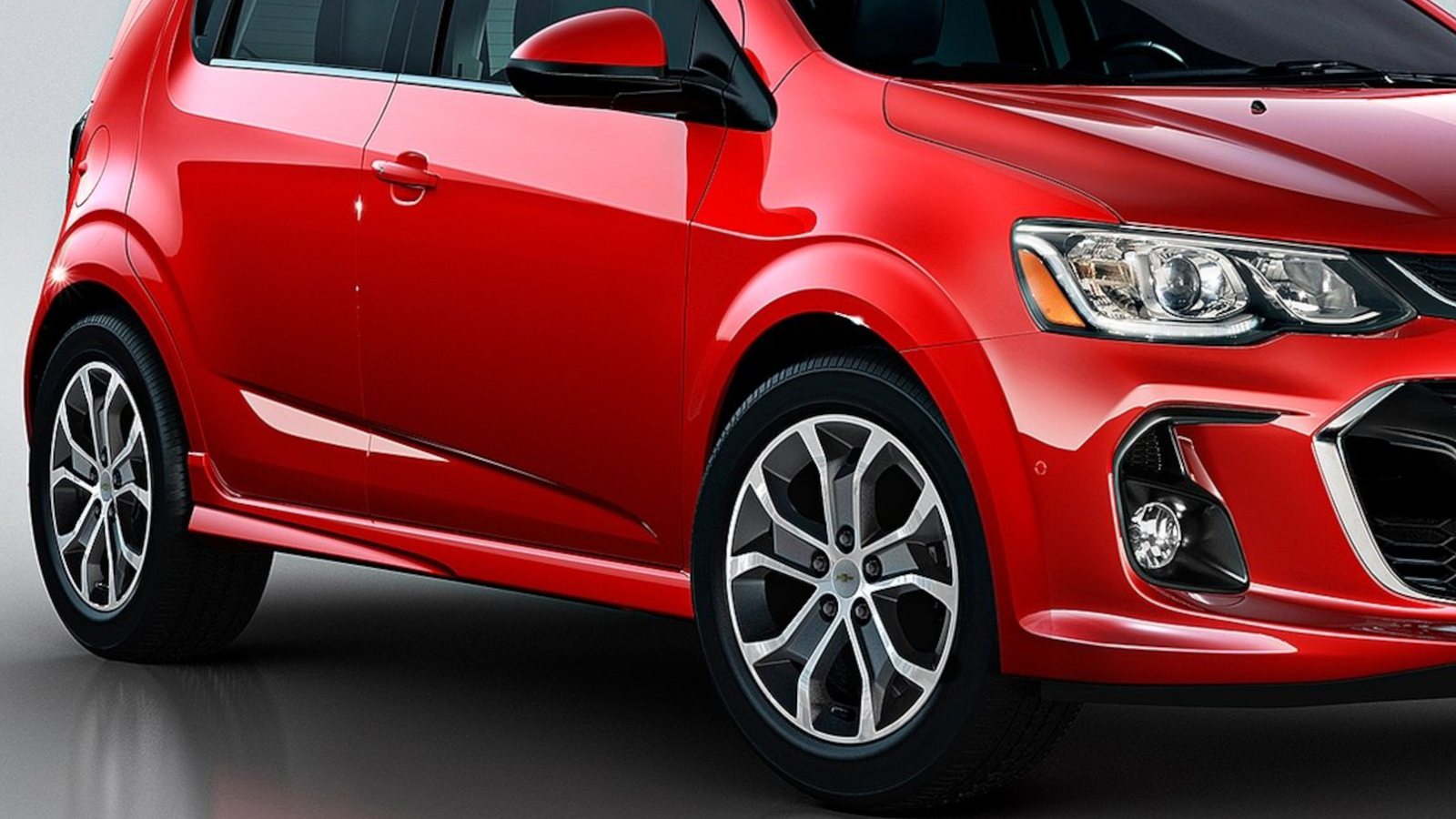
This Reliable Hatchback From 2020 Could Be Yours For Under $10k
These days, the US market isn’t a nice place to be if you happen to be a non-performance-oriented hatchback. For many reasons, Americans fell quickly out of love with the hatchback some 10 years ago, despite the fact that we weren’t very much in love with them in the first place. Sure, there are a couple of holdouts still in the new car market, like the Honda Civic Type R and the Toyota GR Corolla, but these are performance models, not run-of-the-mill five-door hatchbacks.
Just a few years ago, Chevrolet was still busy churning out one of the final, regular hatchbacks to be sold in the US, and the second-to-last hatchback to be produced by a US-based automaker. It was called the Sonic, and it was Chevy’s slightly larger hatch, as the Detroit Giant also produced the smaller Spark at the time, as well. The thing with the Sonic, though, is it was the most reliable hatch you could buy in 2020, its final model year. These days, getting into a Sonic hatch is a cheap endeavor, and definitely worth looking into.

- Base Trim Engine
-
1.4L Turbo Inline-4 Gas
- Base Trim Transmission
-
6-Speed Automatic
- Base Trim Drivetrain
-
Front-Wheel Drive
Tiny And Reliable

2020 Chevrolet Sonic Hatchback Key Points
- Score 93 out of a possible 100 points for reliability, according to J.D. Power
- Currently, it boasts an average used price of $9,056
- Known as the Aveo in other world markets
- Marked the Sonic’s final model year
- Loosely related to the Chevrolet Trax
Nearly 20 years before the 2020 Sonic Hatchback’s wheels first hit polished showroom floors, Chevrolet began building the model the Sonic was based on. The nameplate, coined “Aveo”, was introduced to the US market in 2004, and was based on an even earlier design penned by Daewoo. At the time, General Motors had just taken full financial control of Daewoo, saving it from the brink of ruin. In total, the Aveo was marketed in over 120 different countries under several brand names, such as Daewoo, Chevrolet, Holden, ZAZ, Pontiac, and Suzuki.
From 2004 to 2010, the Aveo sat in Chevrolet’s lineup as the cheapest car it offered. It was marketed towards new drivers and those who were only interested in cheap, no-frills transportation with a Chevy Bowtie affixed to its front grille. However, despite its cheap price and cute face, the Aveo failed to make a significant impact in the US market. Because of this, once the Aveo was due for a generational refresh, Chevrolet decided to change its name for the American market to the Sonic.

The newly-coined Sonic debuted in late 2010 at the Paris Motor Show, and would be offered as both a sedan and hatchback, much like the Aveo it was replacing. While it would be known as the Sonic in the US, the model would continue to don the Aveo nameplate in most of its other world markets. The Sonic was a particularly important model for General Motors, as it was a combination of efforts from engineers employed by Holden, Opel, and GM Korea. The main fruit of the international labor was the new GM Gamma II global vehicle platform, a subcompact vehicle architecture still in use today.
High Hopes, Low Performance

Upon its 2012 model-year debut, the Sonic seemed to be more popular than the Aveo initially proved to be. However, by 2014, sales had peaked at approximately 94,000 units, only to enter a decline it would never recover from. The downturn in sales can’t be entirely blamed on the little Sonic, as the US market was cooling towards any and all sedans, coupes, and hatchbacks. It’s worth noting, though, that the Sonic’s Japanese competitors fared much better during this time than it did.
As sales continued to decline, and American car buyers lost more and more interest in sedans, coupes, and hatchbacks, General Motors decided to pull the plug on the little Sonic following the 2020 model year. The final example rolled off GM’s Michigan-based Lake Orion factory floor on October 19th, 2024. The even-smaller Chevrolet Spark hatchback continued in production until 2022, when it was also discontinued due to poor sales and a shifting market.
The 2020 Sonic Hatchback’s Detailed Specs & Features

Living underneath the 2020 Sonic’s microscopic hood is an equally-microbial 1.4-liter turbocharged four-pot mill belonging to GM’s Ecotec engine family. The Ecotec family of motors has been in production since 1999, and consists of several four-piston mills across a total of three generations, the latest of which is still in production. While the Ecotec engine family has a bit of a checkered past regarding reliability, especially when it comes to the 1.4 turbo, this seems to have not affected the ’20 Sonic’s reliability and performance, at least according to J.D. Power.
As for transmissions, the 2020 Sonic came standard with a six-speed automatic. Surprisingly, General Motors pulled the plug on the Sonic’s manual transmission option for the 2020 model year, leaving the small hatchback without a fun-to-drive stick. Front-wheel drive was the sole drivetrain option. Its front suspension consists of MacPherson struts, and its rear consists of a semi-independent setup utilizing coil springs in both the front and rear.

A performance-oriented Sonic was available for the 2020 model year called the “RS”. However, the RS didn’t offer any actual performance upgrades. Instead, the RS package was solely an appearance package, consisting of features like unique wheels, a more-aggressive body kit, black Chevrolet emblems, and black accents in its interior. While not meant for function, a spoiler was also added to the Sonic’s exterior as part of the RS package.
We’ll lay out the 2020 Chevrolet Sonic Hatchback’s detailed engine and performance specs in the table below:
|
Engine Details |
1.4L turbocharged inline-four |
|---|---|
|
Horsepower |
138 hp |
|
Torque |
148 lb-ft |
|
0-60 MPH Time |
8.1 seconds |
|
Top Speed |
125 mph |
|
Curb Weight |
2,857–2,917 lbs |
|
Original Starting Price (2020) |
$16,720 |
*Specs courtesy of Chevrolet, Kelley Blue Book, & Car and Driver testing

Inside, the Sonic Hatchback is about as kitted as you’d expect a cheap-and-cheerful GM product to be. As standard, air conditioning is featured. In addition, a seven-inch touchscreen, StabiliTrak traction control, and a four-speaker sound system are standard, as well. Optionally, buyers could go for higher-trimmed variants of the Sonic Hatchback, such as the Premier, which features luxuries such as a leather-wrapped steering wheel, and a forward-collision mitigation system. The RS package adds sporty, “RS”-stitched seats.
Here’s How Its Price Stacks Up

These days, you can pick up a used 2020 Sonic Hatch with average mileage for just about $9,056, or nearly half its original price when it was new just five years ago. However, the Sonic Hatch isn’t the only run-of-the-mill hatchback currently in the used market. There are other options to contend with, such as the Kia Rio hatchback and the Toyota Yaris. In the table below, we’ll outline the current average prices of all three, with the Sonic’s price bolded:
|
2020 Kia Rio Hatch |
2020 Toyota Yaris |
2020 Chevrolet Sonic |
|
|---|---|---|---|
|
Current Average Used Price |
$10,503 |
$14,309 |
$9,056 |
*Pricing courtesy of Kelley Blue Book
So, in essence, despite the potential scariness surrounding the 2020 Sonic’s 1.4-liter Ecotec, it still scored very well in J.D. Power’s reliability ranking. Not to mention, it’s also cheaper than many of its competitors on the used market. It seems that, perhaps, buying a used Sonic Hatch wouldn’t be so bad after all.
Sources: Chevrolet, Kelley Blue Book, USNews, J.D. Power