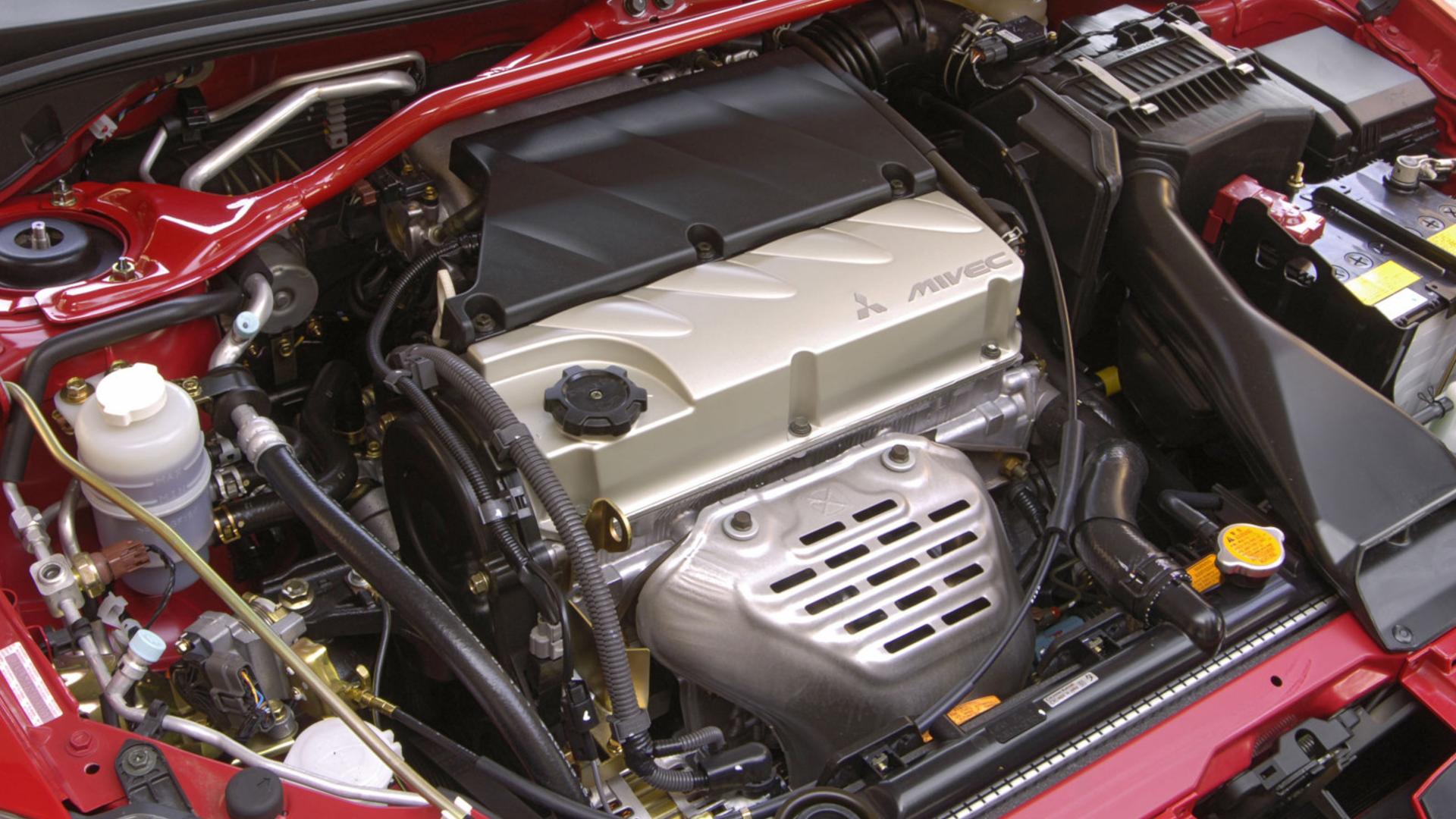
The 40-Year-Old Mitsubishi Engine That Still Powers New Cars To This Day
Hyundai has been in business in South Korea since 1967, and it’s difficult to imagine the American highways without Elantras, Santa Fes, and Sonatas filling out the ranks. But, 40-something years ago, Hyundai didn’t have any presence in the US market at all. And we don’t mean that they were taking shots at the US market and failing to get a foothold, like Toyota with its Toyopet Crown, back in 1958. We mean that you weren’t getting a Hyundai in the US unless you imported one.
Hyundai
- Founded
-
29 December 1967
- Founder
-
Chung Ju-yung
- Headquarters
-
Seoul, South Korea
- Owned By
-
Hyundai Motor Group
- Current CEO
-
Jose Munoz
That changed in the mid-80s with the Hyundai Excel, a subcompact designed by Italdesign’s Giorgetto Giugiaro, and marketed at the cost-conscious driver with clever slogans like “Drive out in a better car than you paid for”. The car was an instant winner, in large part because of its price, but more importantly, the value that you were getting for a meager MSRP of $4,995 (under $15,000 in modern dollars), and a big part of that value was the Orion inline-four it was packing under the hood, a Mitsubishi engine that is still in production today for the Chinese market.
The following is based primarily on information published by the automakers in question, and historical resources as cited. Any opinions offered thereupon are those of the author unless otherwise attributed.
How Hyundai Claimed Their Piece Of The American Market
The Hyundai Excel was advertised as featuring a “plush interior” and “extras that don’t cost extra”. This all contributed to the car making Fortune magazine’s top 10 Best Product list in the year of its release, and it helped Hyundai to sell 168,882 units, which would put the company at more than one million cars sold since the brand’s inception. But, we imagine that the car’s creature comforts, offering mid-range luxury at a lowball price, would have been for naught had it not been a capable, fuel-efficient little trooper, especially with the 1.5-liter 4G15 engine under the hood.
|
First-Gen 1.5-Liter Hyundai Excel Performance Specs |
|
|
Engine |
1.5-Liter NA 4-Cylinder |
|
Power |
71 hp |
|
Transmission |
4 or 5-Speed Manual or 3-Speed Automatic |
|
Drivetrain |
Front-Wheel Drive |
|
Fuel Economy |
27 mpg (combined) |
|
0-60 mph |
12+ Seconds |
Its 71 horsepower might not seem like much in 2025, now that we’ve got budget-priced compact EVs like the Nissan Leaf delivering more than twice that much power, but, back in 1986, you could do a lot worse. The Chevy Celebrity was the top-selling car in the US for 1986, selling at around twice the cost of a new Hyundai Excel, and only delivering a base power output of 93 hp. Hyundai took a bet that Americans would be willing to sacrifice 22 hp in order to save $5,000, and they hit the jackpot.

Related
The V8 Hyundai Luxury Sedan That Thought It Could Play With The Mercedes S-Class
You probably don’t remember this luxurious Hyundai, but you should.
1986 Was A Very Different Time (And Not All That Different, If You Think About It)
Pretty much anyone will tell you that the rise of Asian compacts in the US stems directly from the Oil Crisis. As it became more expensive to refuel our cars, Japan and Korea were simply better at building efficient cars. But, there was another factor that may have contributed to the success of the Hyundai Excel.
The 1980s are largely remembered as a boom period, and 1986 indeed saw the civilian unemployment rate fall from 7.2 percent to 7.0 percent that year. But, at the same time, we had just come off a major economic recession, and we were losing hundreds of thousands of jobs in manufacturing and related industries like machinery and primary metals.

Related
How Hyundai Went From The Grandeur To A Competitive Luxury Brand
Hyundai was seen as somewhat of a joke only two decades or so ago, but now it runs one of the most respected luxury brands in the automotive space.
The mid-1980s were an optimistic era in American history, but after everything we’d just been through, and the losses that the working class were taking, it stands to reason that job insecurity was a key factor in the average American’s major purchasing decisions. Could the average worker afford to spend $10,000 on a Ford Taurus? Maybe. But what happens when he becomes a victim of downsizing, and he still has a big American car to make payments on?
No doubt the Hyundai Excel appealed to savvy, recession-toughened Americans who, like their Depression-baby parents and grandparents, simply weren’t going to let a good deal slip through their fingers. Hyundai has been riding that momentum ever since, still delivering cars that are much better than you’d expect for the price.
Mitsubishi Really Knocked It Out Of The Park With The Orion Engines
The first-gen Excel was offered with a 1.3-liter 4G13, producing 66 hp, or a 1.5-liter 4G15, both members of Mitsubishi’s Orion engine family. The 1.5-liter would go on to become one of the longest-living Japanese engines of all time.
|
4G13 Engine Specs |
4G15 Engine Specs |
|
|
Displacement |
1.3-Liter 4-Cylinder |
1.5-Liter 4-Cylinder |
|
Bore |
2.8 Inches |
2.97 Inches |
|
Stroke |
3.23 Inches |
3.23 Inches |
|
Compression Ratio |
9.4:1 |
|
The Mitsubishi Orion family predates the Excel by nearly a decade, first launching in the Mitsubishi Colt, and featuring in cars like the Lancer, Tredia, Cordia, and a bunch of other late 1970s and early 1980s nameplates nobody under 40 years old will remember.

Related
Hyundai Is Prepared For EV Supply Chain Problems
It’s got a big stockpile of materials.
All variants of the engine are straight-fours built from a cast-iron cylinder block. The Orion was first built to replace the outgoing Neptune engine, the cast-iron four-pot that had carried Mitsubishi through the 1970s.
The 4G13 was available as a 12 or 16-valve SOHC, while the 4G15 has been built as an 8-valve SOHC with a carburetor, and as a 12-valve with a carb or fuel injection, depending on the application. This latter version of the 4G15 was intended for third-gen Mirages and Lancers. The 1989 Excel received a version of the 4G15 that had been tuned up to 85 hp.
China’s Still Cranking These Engines Out
The Mitsubishi Orion family doesn’t really have a successor, because it was never really retired. The last vehicles available in the US with these engines include the fifth-gen Mitsubishi Mirages, which offered a range of Orions throughout the late 1990s, but the engine is still being produced by GAC Mitsubishi Motors in Southern China since 2017.

Related
The Real Reason Chinese Cars Will Never Succeed In America, And It Has Nothing To Do With Tariffs
They lack something American automakers have in spades.
Today, you can find the 4G15 1.5-liter engine in Chinese cars like the Geely Emgrand, a sedan that’s been getting an impressive 114 hp out of the 40-year-old engine since the debut of its fourth generation in 2021. The Emgrand is one of those cars they get pretty much everywhere in the world except here in the US. First launched as the EC7, the Emgrand has been one of the best-selling Chinese cars for more than a decade, exploring the highways of Russia, South Africa, Taiwan, and the United Kingdom across four generations.
When it comes to engine technology, we can admit that we’ve never lived in more exciting times. They’re doing things with hybrids these days that feel like science fiction, and we’ve got more thousand-horse supercars out there than we need, to be honest. This just makes it all the more impressive that Mitsubishi and Hyundai were so far ahead of the curve back in the mid-1980s, that the engine they built for a humble, budget-priced, post-malaise compact is still relevant all around the world.
Sources: Bureau of Labor Statistics, Hyundai, Mitsubishi.