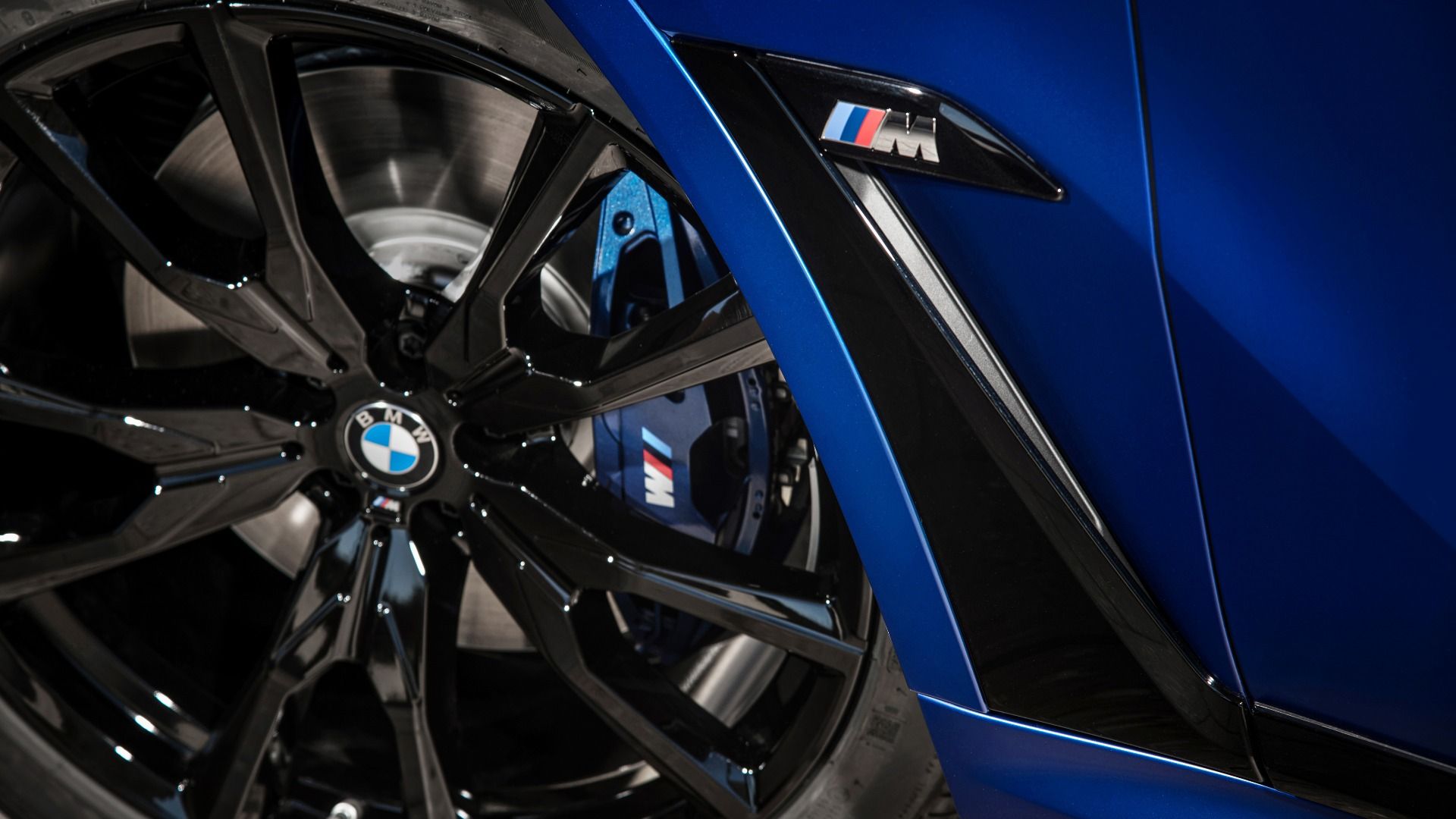
Does BMW’s Three-Row Performance SUV Make Sense
In the automotive landscape, high-end, three-row SUVs are quite something. First becoming iconic for their luxurious interiors and comfortable appointments, the large SUV segment soon became something else: a place for automakers to show off their skills at making things powerful, fast, and desirable. Even the likes of Ferrari and Lamborghini have gotten in on it with the Purosangue and Urus, respectively – but then there is the BMW X7 M60i xDrive, which stands slightly apart in this space. It’s near the top-end of BMW’s SUV portfolio, and it stands out for all the right reasons.
BMW
- Founded
-
1916
- Founder
-
Karl Rapp
- Headquarters
-
Munich, Germany
- Owned By
-
Publicly Traded
- Current CEO
-
Oliver Zipse
Make no mistake, the 2025 BMW X7 M60i is not a full-fledged M vehicle, but what it does is act as a sweet spot of sorts between outright luxury and performance, yet it does so without sacrificing family comfort. It also doesn’t cost nearly as much as the Alpina XB7 but still offers some thrills. So, let’s break the X7 M60i xDrive down and unearth why it earns its flagship status.
The BMW X7 M60i xDrive is not the most potent X7 in the lineup for 2025 – so we explore why BMW didn’t go the whole hog and make an X7 M, and why the X7 M60i still makes sense. The base MSRP (manufacturer’s suggested retail price), where mentioned, excludes destination fees and other costs.
What Is The X7 M60i, And Where Does It Fit In?
While the rest of the automotive world calls it an SUV, BMW refers to its SUVs as SAVs, or Sports Activity Vehicles. And in the German automaker’s portfolio, the X7 is its largest SUV. The X7 M60i xDrive is technically the second most powerful version of the X7, just behind the Alpina XB7, but the latter has a price tag nearing $160,000. At $113,900, the X7 M60i is a little more approachable. It slots in above the xDrive40i with nearly 150 horsepower more. So, while it’s not the most potent X7 available, it is the one that makes the most sense.

Related
BMW X7 Generations: Everything You Need To Know In One Place
See all generations of the BMW X7: discover information about every model year and check out what was changed.
From the outside, the X7 M60i boasts some of the most aggressive bumpers BMW ever fitted to its vehicles and there are several M-specific design cues both inside and out – even if this is not an M car. The illumination around the kidney grille is a standard feature, and if the standard 21-inch wheels are not badass enough, then the 23s can be specified. We’ll get to the interior soon, but the SUV offers three rows of seats like its siblings and is designed to attempt to keep every occupant as comfortable as possible, despite the suspension being tuned for performance.
So, how do we classify the X7 M60i? Think of it as the best example of a non-M-SUV that offers M-performance without the M badge and sans Alpina pricing.
Why BMW Will Not Build An X7 M
Though it’s an enticing idea to push BMW to put a full-blown X7 M into production, there are just too many justifiable reasons why it would not be a great idea. Yes, take BMW’s biggest SUV and drop its most powerful M powertrain in it, stiffen the suspension, and let it battle the competition. Sweet idea, right? Well, there are other factors to consider.
BMW’s M vehicles are about more than just straight-line performance. It’s about being agile, giving ample feedback through the steering wheel, and delivering a dynamic driving experience. These are traits that all M cars must adhere to, which an X7 M might have some difficulty with. The X7 M60i is already kitted with an impressive powertrain that delivers on the M-car traits. So, when you add more power and further stiffen the chassis of a near-6,000-pound SUV just to enter full-on M territory, it’d mean diminishing other returns.
And would it be worth it?
The X7 M60i already wears its M badges with pride and the M components, like the M Sport differential and rear-wheel steering, mean that prospective owners are getting a taste of M Performance without compromising the X7 M60i as BMW’s near-flagship SUV. Besides, there’s also the controversial XM which is supposed to offer true M SUV traits… No, instead we have the X7 M60i; if BMW added too much power and presence to turn it into a track-day special, it would compromise and diminish its ultimate purpose.
How The X7 M60i xDrive Stacks Up Against Other M Powertrains
|
Powertrains: BMW X7 M60i vs Siblings |
||||
|---|---|---|---|---|
|
|
X7 M60i xDrive |
M5 |
X5 M Competition |
XM Label |
|
MSRP |
$113,900 |
$121,900 |
$129,700 |
$186,700 |
|
Engine |
4.4L Twin-Turbo V8, Gas, Hybrid |
4.4L Twin-Turbo V8, Gas, PHEV |
4.4L Twin-Turbo V8, Gas |
4.4L Twin-Turbo V8, Gas, PHEV |
|
Power |
523 hp |
717 hp |
617 hp |
738 hp |
|
Torque |
553 lb-ft |
738 lb-ft |
553 lb-ft |
738 lb-ft |
|
0-60 mph |
4.5 Seconds |
3.4 Seconds |
3.7 Seconds |
3.6 Seconds |
|
Top speed |
155 mph (175 mph w/M Driver’s Package) |
155 mph (190 mph w/M Driver’s Package) |
155 mph (177 mph w/M Driver’s Package) |
155 mph (180 mph w/M Driver’s Package) |
|
Transmission |
8-Speed Auto |
|||
|
Drivetrain |
AWD |
|||
|
Curb weight |
5,895 lbs |
5,390 lbs |
5,455 lbs |
6,062 lbs |
The BMW X7 M60i is fitted with the Bavarian automaker’s 4.4-liter twin-turbocharged V8 gas engine, featuring a 48V mild-hybrid system. The total system output comes in at 523 horsepower and 553 lb-feet of torque, and all of that power goes to all four wheels through an eight-speed automatic transmission. The BMW X7 M60i 0-60 mph is decent, too, at 4.5 seconds. That is some serious grunt, although it puts this powertrain just below other units from BMW’s M division.
The 2025 BMW M5, for instance, uses a similar twin-turbo V8 setup as the X7 M60i, but introduces a plug-in hybrid (PHEV) setup borrowed from the more powerful XM. The entire system generates a whopping 717 hp and 738 lb-ft. In addition to the insane pulling power, the M5 offers an all-electric driving range of up to 25 miles.
Another SUV that employs the same engine as the X7 M60i is the X5 M Competition. Backed by the 48V mild-hybrid system, 617 hp and 553 lb-ft. The performance figures are epic, too, which is nothing short of astounding for a vehicle not really designed for such antics – admittedly, it’s smaller and more nimble, so more suited to being a little silly. However, the big Jim in BMW’s portfolio is the 4.4L twin-turbo V8 in the XM. The big news is BMW opting to trim the XM lineup to just one model – the XM Label – with the hybrid SUV sending 738 hp and 738 lb-ft to all four wheels. 0-60 mph needs only 3.6 seconds and the top speed of 180 mph will fly by in a blink.

Related
Fastest 3-Row SUVs For 2025
Where versatility meets breathtaking performance.
Considering these SUVs from the BMW stable, there is no need for the X7 M60i to be “another” fast BMW M vehicle. It gives the required performance and shove that accompanies its power outputs, without the massive price penalty or having too much to handle. The X7 M60i shares some of its DNA with real M cars, but it’s built for a different purpose.
How The Performance Compares To 3-Row SUV Rivals
So we have the powertrain and performance figures for the BMW X7 M60i, but how does it compare to its rivals?
A key rival is the Range Rover SE LWB (long wheelbase). Thanks to the partnership between BMW and Jaguar Land Rover, the Range Rover employs a BMW-sourced 4.4L V8 engine, which matches the BMW X7 M60i horsepower. The big difference between the Range Rover and the X7 M60i is that it focuses a lot more on comfort and presence than performance. For even more individuality, the Range Rover Autobiography LWB offers that and more, but it’ll cost you (anywhere from $172,800).
The Mercedes-AMG GLS 63 4MATIC+ is the X7’s direct rival and is powered by a 4.0L bi-turbo V8 engine that incorporates mild-hybrid technology. Power comes in at 603 hp and 627 lb-ft, aiding the SUV in hitting 60 mph from standstill in 4.1 seconds.
The Cadillac Escalade-V brings some home-grown performance into the conversation. Powered by a supercharged 6.2L V8 engine, 682 hp and 653 lb-ft help move the SUV from 0 to 60 mph in 4.4 seconds. It’s loud, and it’s large.
|
BMW X7 M60i vs 3-Row Rivals |
||||
|---|---|---|---|---|
|
|
X7 M60i xDrive |
Range Rover SE LWB |
Mercedes-AMG GLS 63 |
Cadillac Escalade-V |
|
MSRP |
$113,900 |
$117,200 |
$149,500 |
$162,500 |
|
Engine |
4.4L Twin-Turbo V8, Gas, Hybrid |
4.4L Twin-Turbo V8, Gas |
4.0L V8 bi-turbo, Gas, Hybrid |
6.2L supercharged V8, Gas |
|
Power |
523 hp |
523 hp |
603 hp |
682 hp |
|
Torque |
553 lb-ft |
553 lb-ft |
627 lb-ft |
653 lb-ft |
|
0-60 mph |
4.5 Seconds |
4.6 Seconds |
4.1 Seconds |
4.4 Seconds |
|
Top speed |
155 mph (175 mph w/M Driver’s Package) |
155 mph |
155 mph |
125 mph |
|
Transmission |
8-Speed Auto |
8-Speed Auto |
9-Speed Auto |
10-Speed Auto |
|
Drivetrain |
AWD |
|||
|
Seats |
7 |
8 |
||
Interior And Practicality On The X7 M60i
Performance is only one aspect of the X7 M60i xDrive, because it’s also one of BMW’s finest examples of a luxury lounge on wheels. Front passengers are treated to heated seats, while ventilation and massage functions are optional extras. The Curved Display combines a 12.3-inch digital gauge cluster and a 14.9-inch infotainment screen in a single sweeping panel, and runs on BMW Operating System 8. A nice touch is the M logo that flashes by virtue of the ambient lighting bar.
While the BMW X7 M60i interior comes standard as a seven seater, it can be specified with six seats, cutting the second row from three seats to two and turning them into captain’s chairs. The second row seats are electronically adjustable, which makes entry and exit to the third row a relatively easy process.
Notable items:
- Storage units strewn throughout the cabin
- Deep door bins
- Wireless charging tray
- Heated and cooled cupholders
- USB-C ports for all three rows
- Split tailgate
- Air suspension buttons in cargo area
Is The BMW X7 M60i xDrive Justified?
Compared to some of BMW’s M SUVs, the X7 M60i xDrive is not an outrageous 3-row SUV. However, it’s perhaps the most well-rounded – especially at its price point. It doesn’t try to outgun siblings or outpunch its rivals. Instead, it succeeds in being BMW’s top-tier three-row SUV with a powerful engine and a comfortable interior. While other brands may have gone all-out to create some crazy three-rows, the X7 M60i is a little more restrained – and that’s a good thing. Sometimes less is more, and in this case, we think the X7 M60i is just enough of an M-badged car, and sufficiently Bimmer-esque to earn its place in the lineup.

Related
2027 BMW X7 Is Gaining Something In Common With A Mustang
BMW’s new big luxury SUV is starting to come together, nifty door handles and all.
FAQs
How much does a BMW X7 M60i cost?
The 2025 BMW X7 M60i xDrive’s pricing starts at $113,900 in the USA, excluding options, taxes, and destination charges. When optional extras are specified, the price can increase substantially.
What is the difference between the BMW X7 and the X7 M60i?
The X7 M60i is the range-topping model. It also includes M-specific features like sportier suspension, standard 21-inch wheels, and the “Iconic Glow” illuminated kidney grille. The X7 xDrive40i is powered by a six-cylinder engine and makes 375 hp and 398 lb-ft of torque, while the X7 M60i has a bigger V8 engine and makes 523 hp and 553 lb-ft.
How fast is the BMW X7 M60i?
The BMW X7 M60i xDrive accelerates from 0-60 mph in 4.5 seconds, thanks to its twin-turbo V8 engine and all-wheel-drive setup; it has an electronically limited top speed of 155 mph.
How much horsepower does a BMW X7 M60i have?
The BMW X7 M60i’s 4.4-liter twin-turbo V8 engine, with mild-hybrid assistance, produces 523 horsepower and 553 lb-feet of torque. The engine is taken directly from BMW’s M division, even though the X7 M60i is not a full-fledged M vehicle.
Sources: BMW, Cadillac, Land Rover, Mercedes-Benz