Best Electric Cars | 2025 New EV Vehicles Rankings
The world has started moving away from the internal combustion engine (ICE), with even hybrids taking a back seat as the age of electric cars dawns upon us. The fact that several automakers have made commitments to completely phase out their gasoline-powered vehicles is evidence of this. So, with truly green cars now on the cards for the masses, especially in the US, it’s more important than ever to know which electric cars offer the best value for your hard-earned money. Luckily, we have the rankings of the best electric cars of 2025 right here for you, along with some information on what makes each of these models the best when it comes to e-mobility.
Vehicles are assigned a BuzzScore in relation to their direct segment competitors, and as such, vehicles in this list, while similarly scored, do not necessarily compete directly against one another. Find out more about how the BuzzScore ratings work here. These lists are continuously updated with the latest BuzzScores and vehicles as they become available.
1
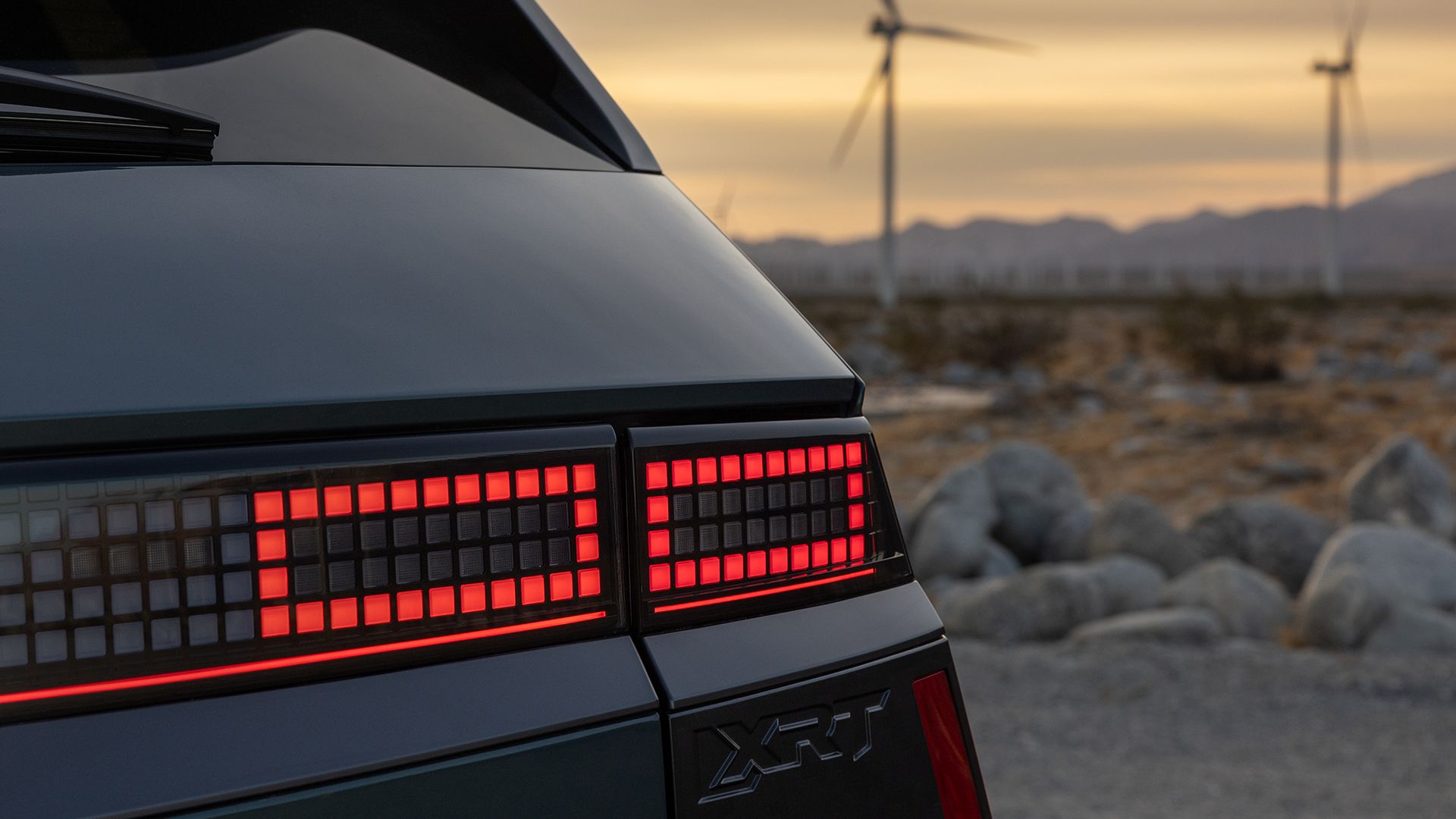
Hyundai Ioniq 5
If you’re in the market for a relatively affordable EV, Hyundai has still been killing it with its electric cars. The Hyundai Ioniq 5 is continually at the top of electric vehicles lists, like ours. Among the newest electric cars, the Ioniq 5 is a respectable SUV for a few reasons. To start, the base MSRP for one is $42,600, making it one of the cheapest electric SUVs. It comes with either a single motor for the rear wheels, or dual motors for AWD. Power output ranges between 168 horsepower and 268 lb-ft in the base model with RWD, to 320 hp and 446 lb-ft for AWD trims. The EPA estimates a maximum range of up to 318 miles on a full charge.
Specifications aside, the Ioniq 5 has a refreshing design, rides and handles well, and is packed with safety features.
“The Ioniq 5 has the aggressive acceleration that is a hallmark of electric vehicles. It’ll press you back in your seat and put a smile on your face while still keeping you fully in control. On winding roads, it handles beautifully with four levels of regenerative braking and true one-pedal driving that is exceptionally easy to modulate.”
– Nicole Wakelin, Editor-at-Large, CarBuzz

Related
2025 Hyundai Ioniq 5 First Drive Review: A Great EV Gets Even Better
The refreshed 2025 Hyundai Ioniq 5 gets multiple small improvements and a new off-road trim that make it better than ever.
2
BMW iX

2025 BMW iX
- Engine
-
Electric
- Horsepower
-
516-610 hp
- Base MSRP
-
$87,250
While not everybody imagines BMW as an electric car company, a couple of its EVs are among the best electric cars. The first model that stands out is the BMW iX. This SUV is every bit as luxurious and sporty as other BMWs, and offers an M60 model with even more power. The iX starts at $87,250 for the xDrive50 base trim, which generates 516 horsepower and 564 lb-ft of torque. The M60 version, however, makes 610 hp and 749 lb-ft, and can drive from 0-60 mph in 3.6 seconds while still being capable of 285 miles. The xDrive50 trim has a better estimated range, and can reach about 309 miles.
All iXs have a stunning interior, with a modern design and impressive attention to detail. You’ll have to get past the iX’s divisive face to enjoy it, though.
3
Porsche Taycan

The best electric car from Porsche is the regular Taycan. Porsche has a handful of versions of the Taycan, and we’ll talk about a more powerful version later, but the standard Taycan is enough to receive praise. The base model sedan starts at $99,400, so you can expect plenty of standard features and a comfortable ride. There are two battery options: performance and performance plus. The first option gives you 402 horsepower and 302 lb-ft of torque, and the second provides 429 hp and 309 lb-ft. These are overboost outputs. The Taycan’s top speed is 143 mph, and it can do 0-60 mph in 4.5 seconds. The EPA estimates this electric sedan can 318 miles with the performance plus battery.
4
Hyundai Ioniq 6

The next Hyundai on our list of all-electric cars is the Ioniq 6. This new electric car is a respectable and comfortable commuter with unique styling. This electric Hyundai starts at $37,850, which isn’t cheap, but it’s not bad as far as EVs go. There are four trims available, and among those trims are options for either RWD or AWD and standard versus extended batteries. When sorting through your choices, the specs boil down to this: The best power comes from those with all-wheel drive and the extended-range battery, which make 320 hp and 446 lb-ft, but the best range comes from the SE trim with RWD and the extended battery for 342 miles.
“The Ioniq 6 is a very well-mannered EV. Steering is responsive, so it’s easy to take the turns on country roads or make your way over on the highway to exit in heavy traffic. It’s a smooth, relaxing car to drive. There are also drive modes of eco, normal, sport, snow, and my mode. This lets you tailor the drive to your preferences and current road conditions.”
– Nicole Wakelin, Editor-at-Large, CarBuzz

Related
Driven: 2025 Hyundai Ioniq 6 Is Sleek And Sexy Electric Power
The Hyundai Ioniq 6 has eye-catching styling with plenty of features and performance at a great price.
5
Audi Q4 e-Tron

Audi makes a statement among the top electric cars with many models represented on our list. The first electric Audi we’ll mention is the Q4 e-tron. Being an Audi, you can expect plenty of comfort features, high-end materials, and a price to match. It’s not the largest electric Audi, though, so the base price starts at $49,800. When equipped with a single motor, the Q4 e-tron makes 282 horsepower and 402 lb-ft of torque, but giving it AWD brings those numbers up to 335 hp and 500 lb-ft. Despite some fairly impressive numbers, it’s still heavy and can do 0-60 mph in 5.4 seconds. The EPA estimates a max of 288 miles of range.
6
Porsche Taycan Turbo Cross Turismo

One of the best electric vehicles you can buy on a high budget is the Porsche Taycan Turbo Cross Turismo. It combines all things Porsche and electric in one package. It’s fast, luxurious, and has extra practicality with a wagon shape that adds cargo space. This version of the Taycan is not for the faint of heart since it starts at $176,300. For that much money, though, you get Porsche luxury, and a ton of power. With Overboost Power and launch control, the Taycan Turbo S Cross Turismo has 938 horsepower and its maximum torque reaches 818 lb-ft. This variant has just 261 miles of range, but that’s the price to pay for this much luxury and tire-shredding performance.
7
Audi Q8 e-Tron

If you want an electric Audi SUV, but the Q4 e-tron is too small, then take a look at the Q8 e-tron. The 2025 model starts at $74,800, produces 402 hp combined, and has an estimated 272 miles of range. If you want one, you better move quickly, though, as Audi is killing this EV off and the factory that builds it after a short 2025 model run. Despite weighing 5,798 lbs, this electric Audi can reach 60 in only 5.4 seconds. It has enough space for five occupants, is highly refined, and boasts a sporty appearance.
8
Audi RS e-Tron GT

While the other electric Audi models we mentioned can be somewhat fun, the RS e-Tron GT is where the real power and speed come into play. All the fun in this car comes at a steep price, though. The 2025 model starts at $167,000. With launch control, this sleek Audi produces 912 hp combined and will reach 60 in a mere 2.4 seconds, making it one of the quickest cars on the planet. Expect a 278-mile range on a full charge, but not if you exploit its performance potential at every opportunity.
2:14

Related
5 Ways The 2025 Audi RS e-tron GT Is Better Than Its Predecessor
A new version of the RS e-tron GT is on the way. What improvements can we expect?
9
Audi S e-Tron GT

While the RS e-tron GT Performance is the top-of-the-line model, take a step down to the Audi S e-tron GT, and you’ll still be happy with the comfort and performance it provides. This model starts at $125,500 before destination charges and fees. It comes standard with dual motors for all-wheel drive, and makes 583 horsepower. However, it gets up to 670 hp in boost mode. Audi claims this version can sprint from 0-60 in 3.3 seconds, and reach a top speed of 152 miles per hour. The EPA estimates this version of the e-tron GT can drive up to 300 miles on a full charge, which is more practical than the RS model’s range.
10
BMW I4 Gran Coupe

2025 BMW I4 Gran Coupe
- Base MSRP
-
$57,900
- Engine
-
Electric
- Drivetrain
-
RWD/AWD
BMW returns for another model on our list of the best electric cars for sale in 2025. The BMW I4 Gran Coupe is a four-door, all-electric 4 Series that provides the same comfort and driving experience as the gas-powered versions, only it’s quieter. The I4 is available in a few trims with RWD or AWD, and the eDrive40 is the cheapest with a starting price of $57,900. This version makes 335 horsepower and drives from 0-60 in 5.5 seconds. The I4 M50, which starts at $70,700, makes 536 hp and can do 0-60 in 3.7 seconds. According to the EPA, the xDrive40 AWD trim can reach 307 miles of range.
The i4 Gran Coupe is quick, refined, and has plenty of comfort and convenience amenities to keep passengers happy.

Related
5 Electric Cars That Don’t Sound Like Vacuum Cleaners
As electric vehicles become the norm, automakers are striving for sonic superiority in the new era
Main Characteristics Of Green Cars
Gone are the days when small hatchbacks were your only choice when it came to owning a fully electric car. Now, EVs take just about any form, from the humble sedan to the ever-popular SUV. Even pickup trucks are entering the ranks of all-electric cars in 2025. However, no matter the shape or size, all the best electric vehicles have some common attributes. These are the things that set EVs apart from their ICE counterparts:
- No need for fossil fuels: First and foremost is the reliance on electricity rather than gasoline or diesel – the classic fossil fuels. These vehicles are outfitted with high-capacity batteries that power their electric motors, with some models sporting as many as four units spread between the axles and/or wheels. This does more than just save money on your fuel bill each month; the reduction in carbon emissions has a profound impact on the environment.
- Charging stations, not gas stations: As with traditional vehicles, EVs require certain infrastructure to function efficiently. You can’t be expected to dash back home and plug in the charger each time your battery gets low. Many companies, such as EVgo, Chargepoint, and Tesla, have put the gears in motion, but there will need to be as many charging stations as there are gas stations before the world will be ready to truly transition over to electric power.
- Silent, instantaneous acceleration: One of the reasons many sports car manufacturers are excited about the EV revolution is the capabilities of pure-electric powertrains. There is no longer a need to wait for the engine to burn fuel, so the moment you put your foot down, you’re already moving. Of course, the excessive amounts of torque developed by electric motors is another of the benefits, so 0-60 mph sprint times of under two seconds are now possible. Some petrolheads will bemoan the lack of an ICE soundtrack to drive alongside since EVs are entirely silent, but you really can’t argue with the performance figures.
- Limited range: Nobody said it was all good news. Just as the lack of the roar of a V6 will keep motoring enthusiasts from joining the revolution until they have no other choice, the comparatively low range of all-electric cars will similarly dissuade regular long-distance drivers. Even the fastest charging stations will take between 15 and 45 minutes to ‘refuel’ an EV. Luckily, some of the newest top-rated electric cars boast maximum ranges in excess of 400 miles. However, this will continue to be one of the greatest disadvantages of the technology for some time.

Related
Best Electric Hatchbacks Of 2025
There are only a few fully electric hatchbacks on sale for the 2025 model year.
What To Consider Before Buying A New EV
As with any vehicle, before you go out and buy a new electric car, you will want to weigh the pros and cons carefully. Just because they are the future of motoring, doesn’t mean EVs are without their flaws.
Pros
- The long-term cost of ownership is lower thanks to lower fuel bills
- More brands are entering the market, pushing down prices and increasing choice
- Lack of carbon emissions is extremely beneficial to the environment
- Instant access to all the torque makes for exciting acceleration
- There is no engine noise at all, so driving can be a truly peaceful experience
- New technology is constantly improving the efficiency of batteries for longer ranges
Cons
- The straight-up purchase price is higher than ICE cars
- Not as cheap to repair/maintain due to complex components
- Extra components add to curb weight
- Charging takes longer than a stop at the pumps
- Motoring enthusiasts will hate the silence
How long does it take to charge an EV?
Every car comes with a different type of battery, with capacities varying wildly. As such, there is no standard charging time. It also depends on the type of charger you are using. Level 1 household outlets take extremely long to fill the newer, larger batteries, which is why the newest electric cars usually come with dual charging cables, or the manufacturer might install a Level 2 charging unit in your home. This will usually take between six and 12 hours. Most public charging stations offer Level 3 fast charging, which can do the same job in as little as 15 to 45 minutes.
Sources: Hyundai, BMW, Porsche, Audi