The Lotus Europa Was A Failure But Had An Impact On Tesla
With an illustrious history dating back 60 years, the 2006 Lotus Europa S may not have set the sales charts on fire, but its impact on the automotive sector carries far more weight than you might expect. In fact, it formed an integral part of two major EV projects.
Lotus
- Founded
-
1948
- Founder
-
Colin Chapman
- Headquarters
-
Hethel, England
- Owned By
-
Geely Holding, Etika Automotive
- Current CEO
-
Qingfeng Feng
In 2006, Lotus retrieved the dusty Europa badge from a shelf in the back of a shed and affixed it to its new grand tourer. Although the latest Europa model was discontinued by 2010 after getting stuck in no man’s land, the GT platform served as the ideal base for at least one other company to get its first car on the road – Tesla.
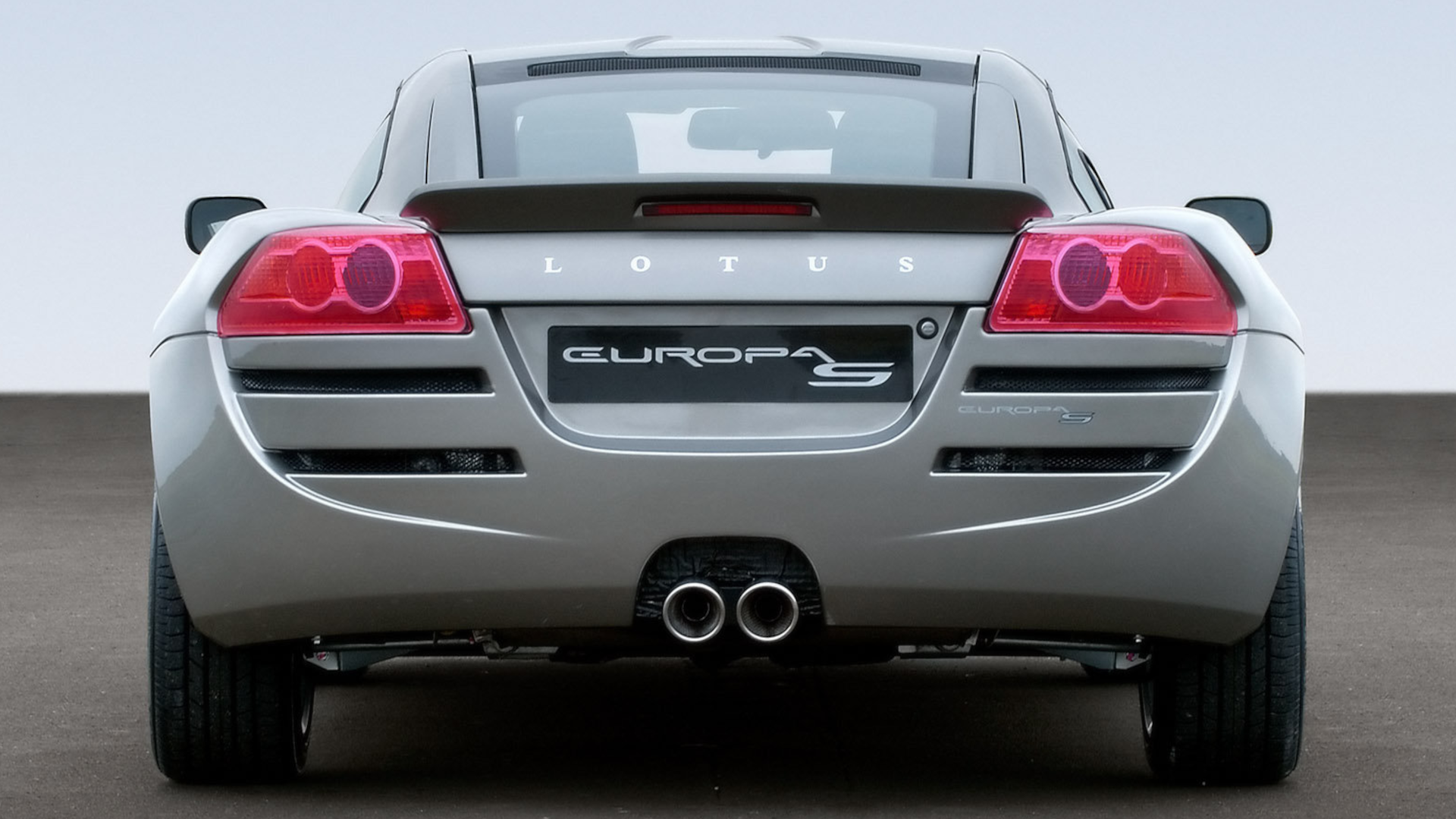
This is a closer look at the 2006 Lotus Europa S, the company’s attempt at a more upmarket grand tourer offering. Failing to set the sales charts on fire, the Europa S did spawn two other significant cars.

Related
One Of The Purest Lightweight Sports Cars Ever Can Now Be Imported To The USA
If you fancy some forbidden British sports car fruit, this fruity little number can now be imported into the US courtesy of the 25-year rule.
Lotus Crashes The GT Party
|
2006 Lotus Europa S |
|
|---|---|
|
Engine |
2.0-liter, turbocharged inline-4 |
|
Power |
200 hp |
|
Torque |
194 lb-ft |
|
0-60 mph |
5.5 seconds |
|
Top speed |
140 mph |
Lotus introduced the new Europa S Grand Tourer in 2006, aiming to offer clients a more comfortable grand touring sports car. For this purpose, the company fitted a 2.0-liter turbocharged four-cylinder engine from General Motors’ Opel parts bin. The 200-horsepower powerplant turned the rear wheels via a five-speed manual gearbox. Lotus used a lengthened version of the bonded aluminum chassis from the Elise.
For additional comfort, the Europa S had lower door sills, making it slightly easier to get out of than an Elise. There was also more headroom, additional sound-deadening, and a small trunk. The standard features included leather upholstery, air conditioning, and even carpeting… yep, even carpeting. That’s a luxury Elise never had.
Lotus founder Colin Chapman believed that, to add speed, one should add ‘lightness.’ And just like the rest of the Lotus range, the Europa S body is made from composite materials, with fiberglass being the main ingredient. It had lightness, 200 hp of user-friendly turbocharged power, more space, a modicum of comfort, and loads of luxury. It seemed like a sweet GT deal.

Related
The Two Times Lotus Went Crazy With Its Lightweight Philosophy
Lotus may not be all about lightness anymore, but it definitely applied that principle to these two unique models.
The Lotus Europa S looked a bit like the designers ran out of creative juice within a couple of hours of starting work on the car. The front end was nowhere as sharp and focused as the Elise. However, the tail was the biggest eyesore. It was like a designer was looking at the Audi TT for inspiration, but when he started drawing, he had too much whiskey, and the lines got out of kilter. The result wasn’t as clean and purposeful as the Elise or Exige.
The cabin, which closely resembled the Elise, was still cramped. Although it had the extra amenities and even carpet, the interior was still very much like an Elise. The cabin didn’t offer the grand-touring experience that the car seemed to promise. It was far less frantic than the Elise, but it was just as fast.

Related
Tesla’s First-Generation Roadster Is Depreciation Proof
While most EVs struggle with depreciation, one in particular should see you get your money back once the time comes to move it on.
Lotus Rolls The SE Dice
However, Lotus customers didn’t buy the brand’s cars just because they were fast. The main selling points were the visceral driving experience, the engine bouncing off the rev limiter, combined with excellent handling. The Europa S was still great in the corners, but that was just not enough reason to part with the heap of cash required to buy one.
This brings us to the final hurdle the Europa S faced – the price. Although it was never on sale in the US, in European markets, it sold at a premium, placing it in the same territory as Porsches and BMW coupes. Up against the on-road refinement of the German models, and with the cheaper Elise and Exige already catering for the enthusiasts, the Lotus Europa S ended up in no man’s land.
By 2008, Lotus rolled the dice on a more affordable version of the car. The company simply called it the Europa, and with only some basic kit, Lotus managed to reduce the entry-level model’s price by several thousand dollars. On the other end of the scale, Lotus also introduced the SE derivative, featuring fancy, lighter wheels, an updated interior, and trim upgrades.
But the changes were too little, too late. Customers had already moved on, and the Europa still failed to set the sales charts on fire. Lotus discontinued it in 2010, with around 10,000 cars rolling off the production line. The model was certainly not a complete failure, but the grand tourer was in a market where it was neither here nor there.
An Electrifying Experience?
|
2009 Dodge Circuit Concept |
|
|---|---|
|
Motor |
One electric motor |
|
Power |
268 hp |
|
0-60 mph |
4.8 seconds |
|
Top speed |
120 mph |
|
Range |
Up to 200 miles |
In 2009, Dodge revealed the Circuit concept. Underneath the skin, it was a Lotus Europa with an all-electric drivetrain. A single electric motor made 268 hp and drove the rear wheels. The automaker claimed the little coupe could sprint to 60 mph in under five seconds, reach a top speed of 120 mph, and had a range of between 150 and 200 miles.
Dodge retained the not-so-easy-on-the-eye fiberglass Europa body, but added extensive leather upholstery, a premium sound system, power windows, air conditioning, and cruise control. Brilliant, right? Dodge certainly thought so. In hindsight, a sporty Dodge EV might have racked up some solid sales in the USA.
The Circuit likely had little chance of reaching production. However, the project died when Fiat bought Chrysler and shut down the company’s EV division, canceling any electric projects in development.

Related
The Ultimate Lightweight Automotive Thrill Can Be Yours For $40K
The story of the iconic Lotus Elise, and what to expect if you’re looking for one on the used market.
Elon Musk Arrives
|
2008 Tesla Roadster |
|
|---|---|
|
Motor |
One electric motor |
|
Power |
248 hp |
|
0-60 mph |
3.9 seconds |
|
Top speed |
125 mph |
|
Range (EPA rated) |
220 miles |
Tesla, with Elon Musk at the helm, launched the 2008 Roadster EV, using the chassis from the Europa/Elise. The car used a three-phase, four-pole electric motor producing 248 hp that attached to a two-speed, electrically-actuated manual shift transmission with an integral differential. Driving the rear wheels, the Roadster could sprint from 0-60 mph in less than four seconds and reach a top speed of 125 mph. It had an EPA-rated range of 220 miles.
The Roadster came with leather-covered, heated sports seats. The Blaupunkt CD stereo had an iPod interface and MP3 playback. Cruise control, power windows and locks, air conditioning, and a single cupholder were standard. Owners could also buy a home-based charger system. The Roadster also did not lag behind in the safety department, with anti-lock brakes, traction control, a tire pressure monitoring system, front airbags, and seat belt pre-tensioners. A ‘Valet’ mode restricted the speed, acceleration, and driving distance.
Tesla sold every single Roadster it made, despite some early transmission and manufacturing setbacks. Tesla signed an agreement with Lotus to supply so-called gliders – essentially, completed cars without the drivetrain. However, only about 6% of the original parts remained in place after Tesla’s modifications. When the contract for the supply of 2,500 glider units expired in 2011, it also marked the end of the first-generation Roadster.
But Tesla had landed. From that point on, it expanded exponentially. The Roadster made a major impact on the automotive sector, and today there’s even a Roadster on its way past Mars with an astronaut named Starman behind the wheel.
A Road To Nowhere?
What would the world be like if we didn’t have the Lotus Elise and Europa? Would we have SpaceX or Neuralink? Who knows? However, what we do know is that the Lotus Europa played a pivotal role in writing at least a few paragraphs in the world’s automotive history.
Even though it may, just like its 1965 predecessor, have failed to get Lotus enthusiasts lining up in front of dealerships, it set in motion a series of events that led to the creation of the Dodge Circuit and the Tesla Roadster. There are not many cars that can claim such accolades.
Sources: Lotus, Fifth Gear, Car, Tesla, Chrysler.