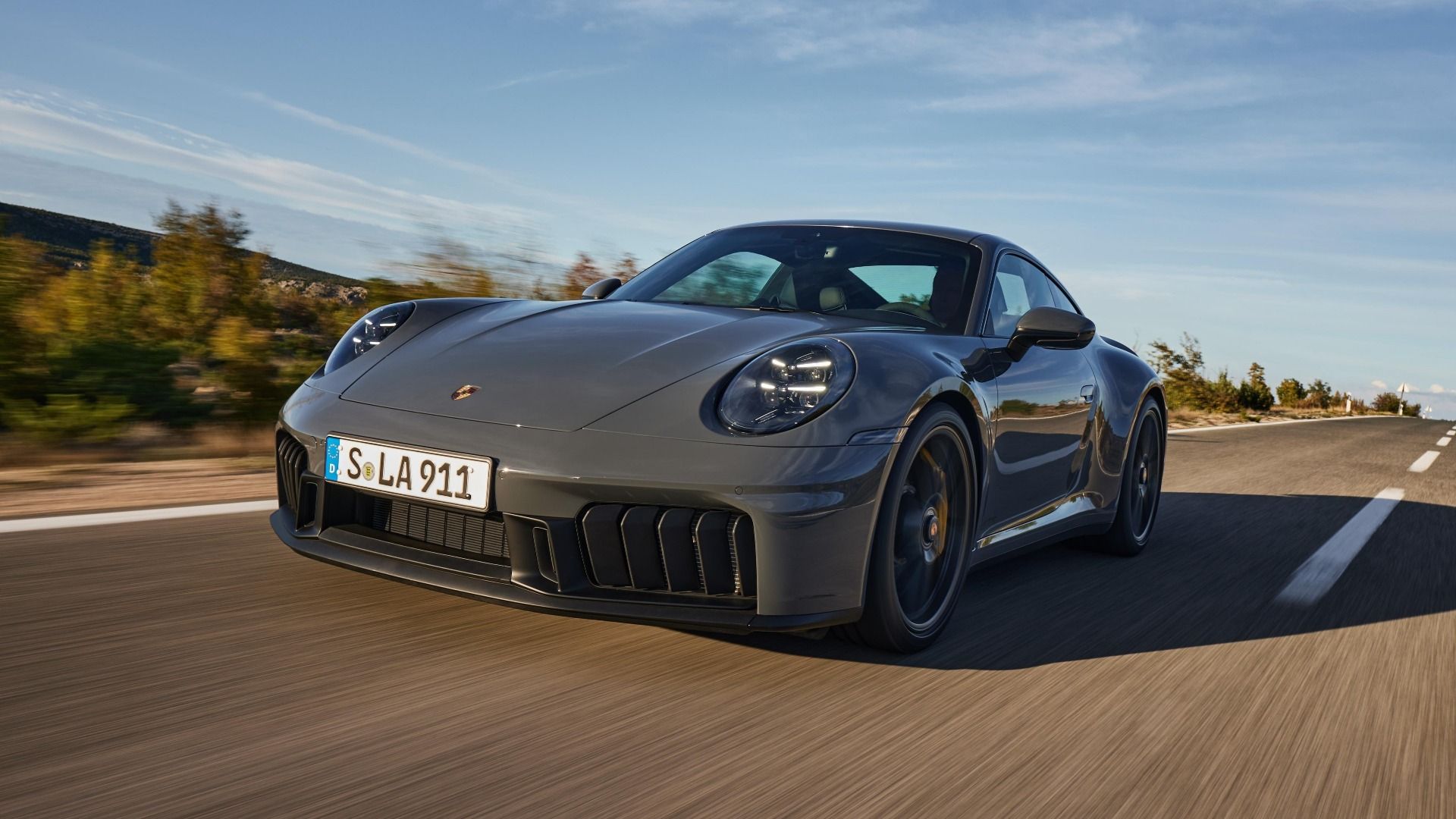
Porsche Has Made A Decision On Its American Car-Building Ambitions
There’s no model in Porsche’s lineup with even a single percentage point of American content, making the automaker – whose biggest market for top-sellers like the Cayenne and Macan is the U.S. – extremely vulnerable to tariffs. Porsche has warned that it will have to increase prices as a result, at a time when both its sales and margins are shrinking. To get around the tariffs, Bloomberg, citing anonymous sources, reported last week that Porsche CEO Oliver Blume was considering localizing some final assembly of its vehicles, among other measures, with specific areas mentioned including the installation of interior components and even the fitting of tires.
Porsche
- Founded
-
1948
- Founder
-
Ferdinand Porsche
- Headquarters
-
Stuttgart, Germany
- Owned By
-
Volkswagen
- Current CEO
-
Oliver Blume
However, a company spokesperson has since revealed to Reuters that Porsche has no plans to shift any part of the production process to the U.S. Currently, the tariffs for European vehicles and parts stand at 25%, but some reciprocal tariffs could push the figure even higher.
Low Volumes Make U.S. Production Difficult

The brand’s finance chief Jochen Breckner said in April that the relatively low volumes made it impossible to justify the cost of shifting production of any vehicles to the U.S. – even when using existing production capacity, like sister company Volkswagen’s plant in Chattanooga, Tennessee, or the planned Scout plant in Blythewood, South Carolina.
Porsche builds the majority of its vehicles exclusively in Germany, but it isn’t averse to production in other countries. The Cayenne is built in Slovakia, at a plant that also builds the related Audi Q7 and Volkswagen Touareg.

Related
Volkswagen Can’t Protect Its Customers From Price Hikes For Long
The German marque assures its customers that prices will not change, but it’s only a matter of time before that changes.
Other automakers plan to increase U.S. production to avoid the tariffs, but these are all high-volume brands. Mercedes-Benz said in May that it will start production of the GLC-Class at its plant in Tuscaloosa, Alabama, in late 2027. Around the same time, Nissan announced it was increasing production of its Rogue at a plant in Smyrna, Tennessee, while reducing output at a plant in Japan that also churns out the compact crossover.
Porsche’s Troubles Started Before The Tariffs

Porsche’s profitability was being challenged even before the announcement of the latest tariffs by the Trump administration in late March. Porsche’s global sales had already dipped 3% in 2024, ending the year at 310,718 vehicles, though the decline was mostly due to a sharp drop in China. In the U.S., Porsche recorded record sales of 76,167 vehicles that year.
With sales dropping and Porsche investing in electric vehicles – and now also previously unplanned ICE vehicles to make up for slower-than-expected growth in demand for its EVs – the automaker expects profitability to take a further hit in 2025, to the tune of €1.3 billion (approximately $1.5 billion). Its profit in 2024 was €5.6 billion ($6.4 billion), which was already down from €7.3 billion ($8.3 billion) the previous year.

Related
Porsche Has A Delicate Product Situation On Its Hands
The automaker is straddling mass-market luxury and ultra-premium performance cars, but sales are slipping a bit.
Job cuts are planned. The automaker said in March that it would cut 3,900 staff by 2029, mostly via retirements and voluntary measures, as well as the expiration of temporary employment contracts.